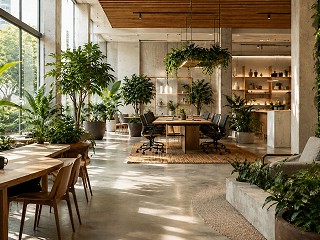
Biophilic Design in the Workplace: What It Is and Why It Works
Most of us feel calmer and more alert after time spent outdoors, yet a typical working day can pass with barely a glimpse of daylight or greenery. Biophilic office design is a response to that. It is about weaving the natural world back into the spaces we work in, from the light that reaches a desk to the materials under our hands. A steady stream of research now links these natural touches to better mood, sharper focus and healthier teams. Here is what biophilic design really means, why it works and how to begin.
What is biophilic design?
Biophilic design is an approach to interiors that reconnects people with nature inside the built environment. The term comes from “biophilia”, the idea that humans carry an instinctive bond with the living world around them. In practice it reaches well beyond standing a few pot plants in a corner. It draws on light, greenery, materials, texture, views, air and even sound, all brought together so a space feels closer to the outdoors.
It tends to fall into three broad strands. The first is direct nature: daylight, planting, living walls, water features and a steady supply of fresh air. The second is natural materials and patterns, such as timber, stone, woven textures and the flowing, organic shapes you notice outside. The third is space and place, which covers open sightlines, views of greenery, and quieter corners that echo the calm of a sheltered spot in a garden or wood. Used together, these strands turn a flat, enclosed room into somewhere that feels alive and easy to be in.
Why it works
The appeal runs deeper than good looks. When researchers study how people respond to their surroundings, natural elements come up again and again as a quiet but powerful influence.
Wellbeing and mood sit at the heart of it. Access to daylight and greenery is consistently associated with lower stress and a more settled, positive frame of mind across the working day. People simply feel better in a room that has light, life and a connection to the outside.
Focus and productivity follow closely. Natural light and views of nature have been shown to support concentration and ease the mental tiredness that builds up during long stretches at a screen. Even a short visual break looking at something green can help the mind reset.
Air quality matters too. Plants, along with stronger ventilation, help keep the air feeling fresh, and people tend to report fewer headaches and less of that mid afternoon slump in a well aired space.
Finally there is the human side of business. A healthier, more pleasant place to work is something staff genuinely value. When you are trying to attract good people and keep hold of them, an environment that feels considered and comfortable speaks volumes about how a company treats its team.
Not just for offices
While biophilic design is most often discussed in the context of offices, the same thinking suits almost any setting where people spend their time. In schools and colleges, daylight and greenery can support calmer, more attentive learning. In retail and leisure spaces, natural materials and planting help create a warm, welcoming feel that encourages people to relax and stay longer. Even in industrial and warehouse settings, bringing light and a touch of nature into welfare areas and offices can lift the places where teams take their breaks. The principles flex to fit the building and the people who use it.
Simple ways to bring nature into a workspace
You do not need a complete refurbishment to feel the difference. Plenty of changes are straightforward:
- Make the most of daylight by keeping window lines clear and choosing glass partitions over solid walls.
- Add planting at several heights, from desk plants and shelving displays to a living wall as a centrepiece.
- Choose natural materials such as timber and stone for finishes, joinery and furniture.
- Work with a calm, natural colour palette instead of harsh, flat tones.
- Create quiet zones and breakout areas that feel softer and more relaxed than the main floor.
-
Improve ventilation and air flow so the space feels fresh from morning to evening.
Even one or two of these can shift how a room feels, and they build on each other as you add more over time.
Common mistakes to avoid
Biophilic design slips up when it becomes purely decorative. A wall of artificial leaves that no one can tend, or plants placed where they will never get enough light, tend to look tired within weeks. It also helps to think about upkeep from the outset, choosing greenery that suits the light levels and the time your team can realistically give it. The aim is a genuine connection to nature that lasts, not a display that fades within a season.
Designing it in from the start
Biophilic design delivers the most when it is considered early, as part of the overall layout and fit out rather than added at the end. Thinking about where daylight falls, how people move through the space and where greenery will actually thrive means the natural elements support the way the building is used, rather than sitting awkwardly around it. Planned in from the beginning, nature becomes part of the structure of the workplace instead of an afterthought.
A healthier way to work
Biophilic design is not a passing trend. It reflects something simple and human: we work better when we feel connected to the world outside. Whether you begin with better daylight and a few well placed plants, or plan a full refresh around natural light and materials, even small steps can make a workplace healthier, calmer and more enjoyable to spend time in.